
Business Website or Landing Page: Which to Choose for Your Business in 2026?


You're about to invest in your company's digital presence, but you're stuck on the decision: business website or landing page?
If you choose wrong, you could waste your budget, lose qualified leads, and fall behind the competition. According to HubSpot data, companies with optimized websites generate 55% more visitors than those without a defined strategy. And well-built landing pages can convert up to 12 times more than generic websites.
But you don't need to guess. We'll help you choose by understanding:
The technical differences between business websites and landing pages
When to use each one
How to combine both to maximize results
By the end of this article, you'll have complete clarity on which format best meets your business objectives and how to implement the right strategy.
What's a Business Website? Definition and When to Use It
A business website is your company's complete digital headquarters. It functions as a content ecosystem, with multiple interconnected pages, designed to present your brand comprehensively and build market authority.
Technical characteristics of a business website:
Multiple pages: Home, About, Services, Portfolio, Blog, Contact
Complete navigation menu: allows free user exploration
Focus on organic SEO: structured to rank for dozens (or hundreds) of keywords
Educational content: Blog, success stories, resources, FAQ
Main objective: build credibility, educate the audience, control communication, and generate sustainable organic traffic
When a business website is the right choice:
You want to build long-term presence and strengthen your brand
You offer multiple products or services that need description
You're pursuing organic Google traffic
You need to educate your audience before conversion (long sales cycle)
You serve different personas with distinct needs
You want to be found for search variations related to your niche
Practical example: a medical clinic offering multiple specialties or services needs separate pages to organize information, a blog with strategies to attract and educate patients, client case studies, testimonials, and contact forms and channels.
What Is a Landing Page? Definition and When to Use It
A landing page is a single page, without distractions, designed to convert visitors into leads or customers. It's the ideal format for specific campaigns and paid traffic.
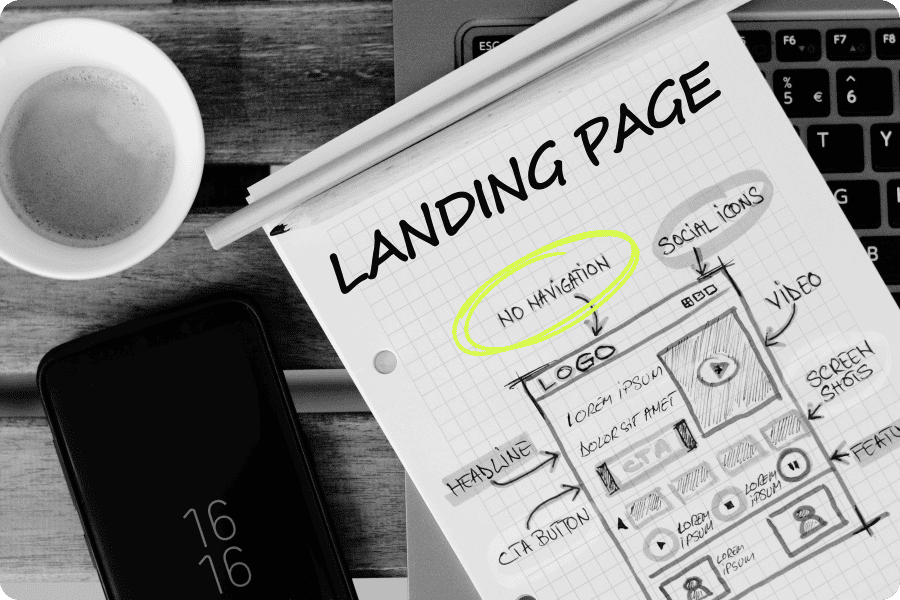
Technical characteristics of a landing page:
Single, focused page: all content directs toward one offer
No navigation menu: eliminates distractions and reduces bounce rate
Dominant CTA (Call-to-Action): visible and persuasive button or form
Conversion-oriented copywriting: clear benefits, social proof, urgency
Main objective: capture leads, sell specific product, register for event
Data proving effectiveness:
According to a 2024 Unbounce study, the average conversion rate for landing pages is 9.7%, but optimized pages in specific niches achieve up to 25% conversion. Companies that use dedicated landing pages for each campaign generate 55% more leads than those directing paid traffic to their homepage.
When a landing page is the right choice:
You have a specific campaign (launch, promotion, webinar)
You're investing in paid traffic (Google Ads, Meta Ads, LinkedIn Ads)
You need to capture leads quickly to nurture later
You want to test an offer before creating larger infrastructure
You have a single focal product to promote intensively
You seek quick ROI (return on investment) measurement
Practical example: a specialist launches an online course and creates a focused landing page, invests in Google and social media ads, and captures numerous registrations in one week.
Business Website or Landing Page: quick comparison

The Winning Strategy: Use Both Together
The question "business website OR landing page" is wrong. The right question is: how do I use both to maximize results?
How successful companies combine website + landing page:
1. Business website as authority base
Builds long-term organic SEO
Educates audience with blog and rich content
Presents portfolio, cases, team
2. Landing pages as "conversion actions"
Each campaign/offer has dedicated landing page
Paid traffic goes directly to optimized page
Tests offers, creatives, and copy without changing main site
Essential Elements for Each Format
Your business website must have:
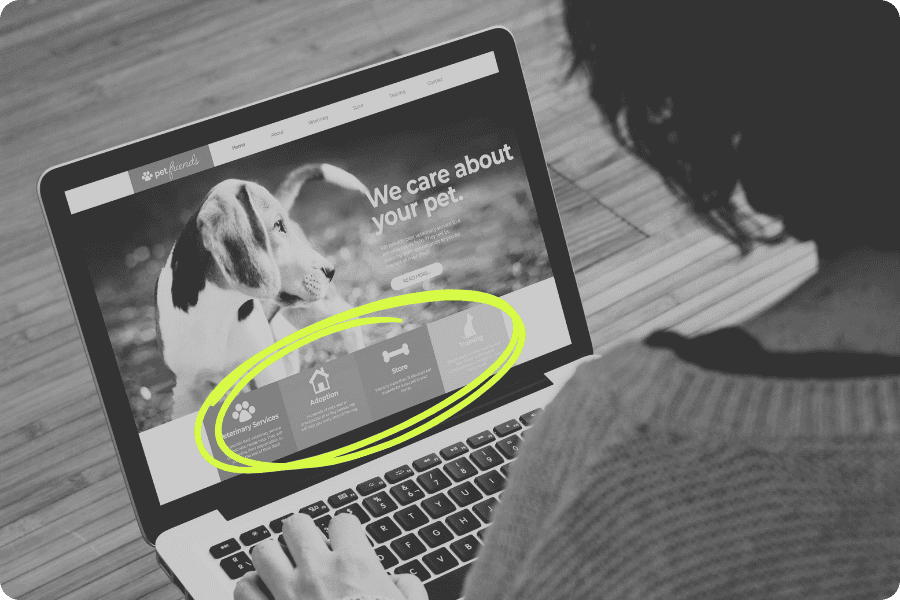
Responsive design (desktop, tablet, and mobile)
Loading speed <3 seconds
On-page SEO optimization (meta tags, headings, friendly URLs)
Blog for educational content
Social proof (testimonials, client logos, numbers)
Service pages with clear CTAs
Integrated contact forms
SSL certificate (https)
Your landing page must have:
Magnetic headline (clear promise in <10 words)
Unique value proposition (why your offer is better)
CTA above the fold (visible without scrolling)
Social proof (testimonials, client logos, numbers)
Simple form (3-5 fields maximum)
Distraction-free design (no menu, external links)
Urgency/scarcity elements (when applicable)
Breaking Down the 4 Most Common Objections to Having a Website
Objection 1: "I have social media, I don't need a website"
Reality: You don't own social media platforms. Instagram can change its algorithm, drop your reach from 10,000 to 500 people overnight, and you can't do anything about it. 93% of online experiences begin on Google, not Instagram.
According to BrightEdge research (2024), 68% of B2B website traffic comes from organic search, not social media.
Objection 2: "My business is small, I don't need this"
Reality: Small businesses need professional digital presence even more. A well-designed website levels the playing field with large companies. When a customer searches for "nutritionist in [your city]," they don't know if you have a small practice or a large clinic—they judge by the quality of your online presence.
88% of consumers research online before buying locally (Google, 2024).
Objection 3: "Nobody will visit it anyway"
Reality: This is the most common fear and the most unfounded. If you invest in basic SEO (right keywords, relevant content), your site appears on Google. If you run paid campaigns, you direct qualified traffic. The problem isn't "nobody visiting"—it's not having an attraction strategy.
Companies that regularly publish blog articles generate 67% more leads than those without a blog (DemandMetric).
Objection 4: "It's too expensive"
Reality: What's more expensive: investing $3,000-$8,000 in a professional website that works 24/7 for years, or spending $2,000/month on ads directing to an Instagram with no strategy?
The cost of not having a digital presence is higher. 57% of users won't recommend companies with poor or nonexistent websites (Sweor).
Digital Presence Isn't Optional in 2026
The choice between business website or landing page isn't a competition, but a strategic decision based on your current objectives.
What's non-negotiable: having a professional digital presence. Your customers are searching on Google right now. If they don't find you—or find an amateur website—they choose your competitor.
Contact Justemarketing: we'll analyze your niche, audience, and objectives to create the perfect digital solution: optimized business website, high-converting landing pages, or integrated strategy.
Talk to you soon ;)


Comments